 blog
9 Calming Nature Prints That Work in a Home Office
Last Updated: November 1, 2026
Quick Summary
Calming nature photography for a home office works best when the image has a clear horizon, soft tones, and little visual clutter, so your eyes can rest between screens. Choose the subject and size based on room size, wall light, and what sits in your main line of sight when you look up from your monitor.
- Water scenes with a clear horizon can suit cramped rooms, since open space makes a room feel larger.
- A single print about 24 to 36 inches wide usually pairs well with a standard desk against a wall.
- Hang the artwork so its center sits roughly 57 to 60 inches from the floor, near seated eye level.
- Keep the bottom edge of a print above a desk at least 6 inches clear of the monitor.
- Set an image as desktop wallpaper for a week to test whether it still feels restful before buying.
Table of Contents
- Why Calming Nature Photography Works in a Home Office
- Choosing Calming Landscapes for Your Workspace
- Forest and Ocean Scenes: Which Setting Suits Your Desk
- Nature Prints for Home Office Sizing, Placement and Framing
- Booking Your Digital Download or Custom Collaboration
- Frequently Asked Questions
Calming nature photography for home office spaces has moved well beyond the decorative afterthought it once was. Photos by Mark Page builds its collection around everyday moments and the natural world, and the same qualities that make a forest ridge or still lake pleasant to look at also make them useful on a workday. The question for most people is not whether to hang nature art in a home office, but which images will hold up over months of daily viewing.
Researchers have studied the link between natural imagery and mood for decades. The American Psychological Association, APA research on nature and stress reduction, has summarized work suggesting that exposure to natural scenes can help people recover from mental fatigue. That evidence is still developing, so treat it as a reason to experiment rather than a guarantee. A quiet landscape on the wall gives the eyes a restful place to land between screens.
Why Calming Nature Photography Works in a Home Office
A home office asks a lot of your attention. Email, video calls and deadlines compete for focus all day, and the room often has little visual variety. A calming landscape gives your gaze somewhere to rest that is not a monitor.
The effect is simple. Soft horizons, water and muted greens tend to read as low-stress to most viewers. Bright, busy images do the opposite. For a workspace, quieter imagery is usually the better choice.
Choosing Calming Landscapes for Your Workspace
Most guides stop at "pick something soothing." A home office is a specific viewing environment, though, and the image that calms you depends on room size, light, wall color, desk position, and how much visual stimulation the rest of the workspace already carries. Use the checklist below to narrow the field before you buy.
Start with the room, not the photo. Measure the wall you will actually look at. A common pattern is that a print should cover roughly 60 to 75 percent of the width of the furniture below it, so a 48-inch desk pairs well with a single print in the 28- to 36-inch-wide range, while a narrow 30-inch console calls for something closer to 18 to 24 inches.
Match the image to the light. North-facing walls receive cool, indirect light all day, which tends to mute warm sunset tones and flatter blue, green, and gray scenes. South-facing walls get strong direct light that can wash out pale skies and create glare on glossy finishes.
Read the wall color. Soft greens and blues recede against warm white or beige walls and feel restful; against cool gray walls they can turn flat, so a scene with a warm accent (sunlit rock, autumn foliage) holds up better. Dark walls absorb detail, so favor simpler compositions with a clear horizon.
Account for desk position and sightlines. The print that does the most work sits in your primary line of sight when you look up from the monitor, usually straight ahead or slightly to the non-dominant side. Images behind you contribute little.
Match image type to the effect you want.
- Forests and woodland: enclosed, grounded, low-contrast. Good for small rooms and focus-heavy work; avoid dense undergrowth if you want calm rather than detail-hunting.
- Water, lakes, rivers, calm ocean: strong horizontal lines and open space. Lakes read as still and contemplative; moving water reads as more energetic. You can browse a still mountain lake image to download or order. Best for expanding a cramped room.
- Mountains: majestic but high-contrast; a single peak under open sky is calmer than a crowded range.
- Meadows and fields: soft, low-detail, warm. Good for north-facing walls and rooms that already feel cool.
- Close-up botanical and macro: intimate and textural, but detail-dense. Use one small print as an accent rather than a large focal piece if you are easily distracted.
Calibrate visual stimulation. If your workspace already has monitors, cables, sticky notes, and shelves, a simple composition with one subject and a clear horizon will feel calmer than a richly detailed scene. If the room is bare, you can afford more detail.
Forest and Ocean Scenes: Which Setting Suits Your Desk
Forest and ocean images do similar work but feel different. A forest ridge under heavy clouds feels grounded and enclosed, which many people find settling. An ocean or beach scene feels open and expansive.
Neither is universally better. A forest image suits a small room where you want a sense of shelter. An ocean view can make a cramped office feel larger. Try both in your actual space before committing.
Ocean photography wall art for focus-heavy days
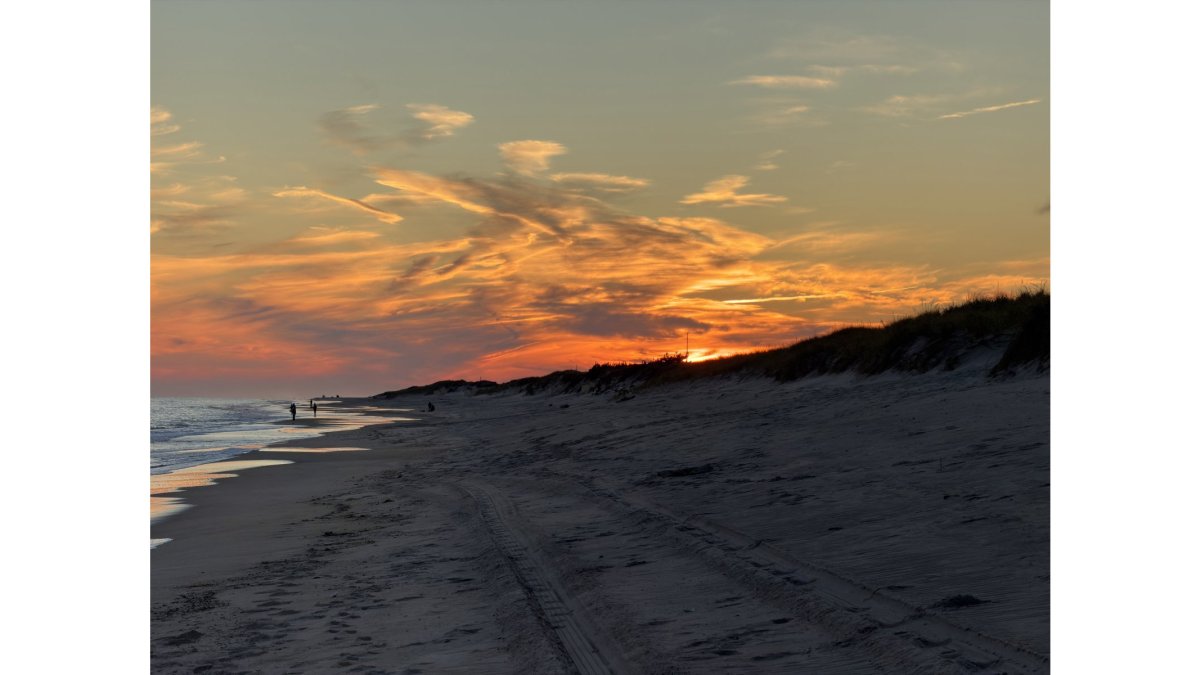
Ocean photography works well on days that demand concentration. The horizon line gives the eye a stable reference, and the open tones avoid the visual noise of busy scenes.
Nature Prints for Home Office Sizing, Placement and Framing
Size and placement decide whether a print calms the room or disappears into it. The guidance below uses common desk and wall layouts so you can act on it without guessing.
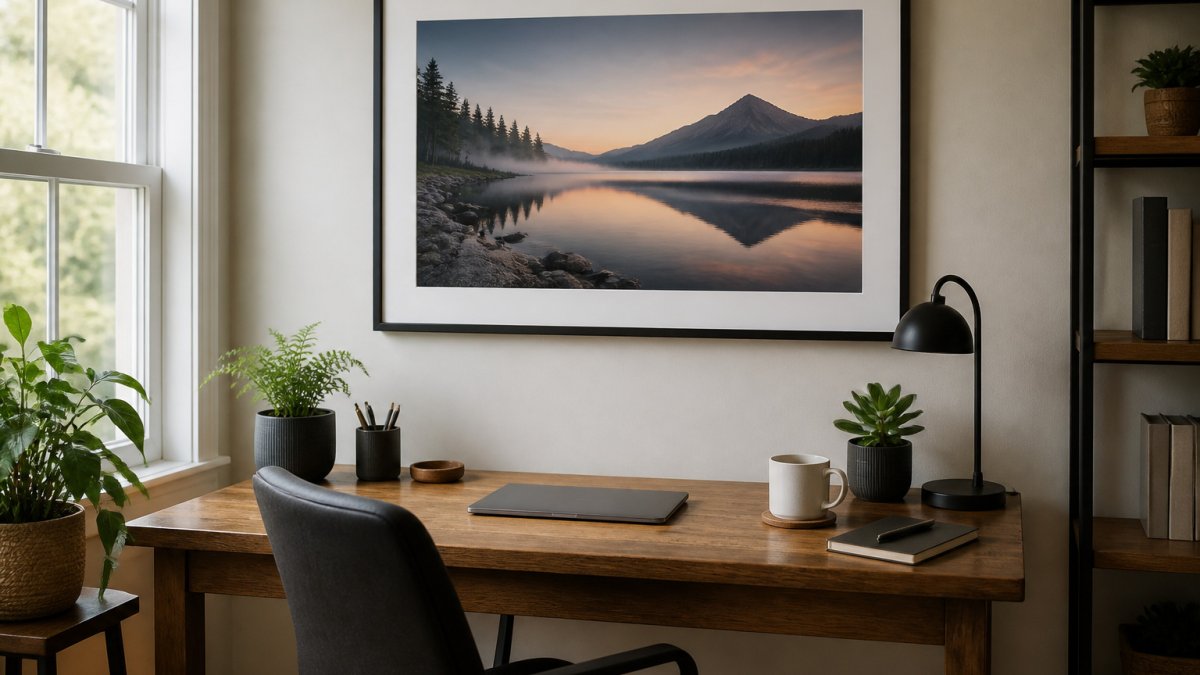
Hanging height. The center of the artwork should sit at roughly 57 to 60 inches from the floor, about eye level when seated at a standard 29- to 30-inch desk. If the print hangs above a desk, aim for the bottom edge to clear the monitor by at least 6 inches so it stays in view when you look up.
Placement by layout.
| Layout | Recommended size | Placement |
|---|---|---|
| Desk against a wall | 24-36 in wide single print | Centered above desk, bottom edge 6-8 in above monitor |
| Desk facing a blank wall | 30-40 in wide single print | Opposite the desk at seated eye level |
| Small office (under 100 sq ft) | One large print, 30-40 in wide | On the longest wall to add perceived depth |
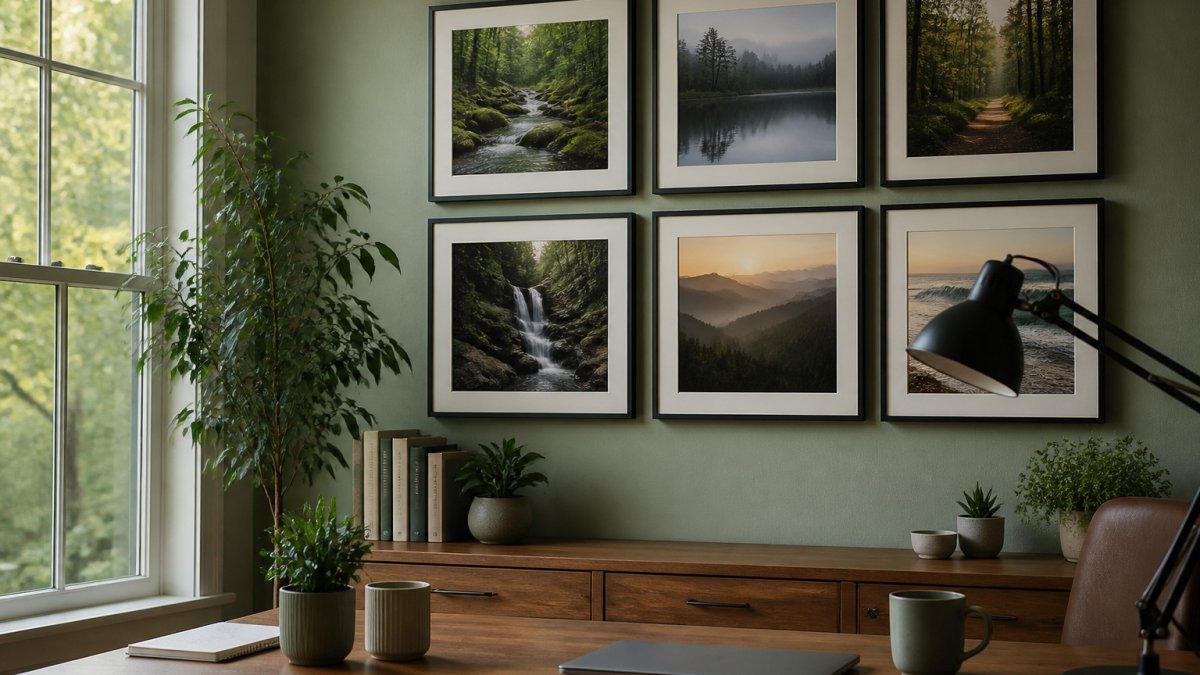
| Shared or multi-use room | 2-3 matched prints | Grouped on one wall, clear of the main sightline |
| Corner desk | 18-24 in wide vertical print | On the side wall within peripheral view |
Glare and lighting. Glossy finishes can wash out under a window or a desk lamp. Matte canvas, anti-glare glass, or a print positioned out of the direct light path solves most of it. Compare which finishes, including acrylic, canvas, metal and framed options, are available for a lake scene. If you use a desk lamp, keep it from pointing at the artwork.
Color-vision and contrast. Not everyone perceives color the same way. Images with strong tonal contrast, a dark ridge against a pale sky, remain legible for viewers with color-vision differences, while subtle green-on-green scenes can flatten. If the print is for a shared space, favor contrast over color nuance.
Screen-based alternatives. If wall space is limited or physical prints are not practical, the same selection rules apply to a monitor: choose a low-detail image with a clear horizon, avoid high-contrast edges behind icons, and reduce brightness so the wallpaper does not compete with your work. A calm image as a background can serve the same restorative purpose as a framed print.
Booking Your Digital Download or Custom Collaboration
Digital downloads are available from the shop, so you can browse the collection before you choose.
If you want something personal, we also offer custom creative collaborations that turn your own memories into professional artwork. Pricing depends on the scope of the project, so contact us through the site for a quote.
Start with one image, see how it sits in your workday, and expand from there.
Frequently Asked Questions
What nature photography is best for a home office?
Scenes with open horizons, still water, soft light and muted greens or blues tend to feel calmest during long workdays. Forest interiors, quiet lakes and gentle coastlines are common choices because they draw the eye without demanding attention. Avoid images with strong, busy foregrounds or high-contrast reds, since those can pull focus away from your screen. Choose one or two prints that match the mood you want rather than filling the wall with many competing scenes.
What size nature print works best above a desk?
A print that spans roughly two-thirds to the full width of the desk usually looks balanced. Hang the center of the artwork at about eye level when seated, which typically places it slightly higher than a standard picture height. Larger single prints create a calm focal point, while a grouped set of smaller prints can suit narrow walls. Measure the space with painter's tape first so you can test proportions before drilling any holes.
Should home office wall art be framed or printed on canvas?
Framed prints with a matte or non-glare glass front reduce reflections from windows and overhead lights, which helps when the wall is near a screen. Canvas prints have a softer, more informal look and need no glass, so they can be simpler to hang in rental spaces. Choose the finish that matches the rest of your decor and the lighting in the room.
Can nature pictures make a home office feel more relaxing?
Many people find that viewing natural scenes gives them a brief visual break during the workday, and calming imagery is often used in interior design for that reason. Research on the specific effects of wall art on stress and concentration is limited, so treat the benefit as a personal comfort rather than a proven outcome. Pairing a print with good lighting and a clear desk tends to support the relaxed feeling most people are looking for.